
A fire extinguisher is one of those things people buy, mount on a wall, and forget about — until the day they actually need it. And that’s exactly the problem. An extinguisher that isn’t fully charged won’t put out a fire; it will just sit there, useless, while the fire grows. Whether you keep one in your home, shop, office, factory, or vehicle, checking its charge regularly is not optional — it’s a basic safety habit that takes less than five minutes.
In this guide, we’ll walk you through exactly how to check if your fire extinguisher is fully charged, what the warning signs of a discharged or weak extinguisher look like, and what to do if it needs a refill. We’ll also cover why timely fire extinguisher refilling in Pakistan matters, given our climate, building types, and the way many extinguishers are stored for years without inspection.
Why Checking the Charge Matters
Fire extinguishers lose pressure over time due to temperature changes, age, small leaks in the valve, or simply being bumped or knocked during storage. A partially charged extinguisher may look completely normal from the outside — same size, same weight, same paint — but when you pull the pin and squeeze the lever, little or nothing comes out. In an emergency, that delay can be the difference between a small, controllable fire and a major loss.
This is why fire safety codes (and common sense) recommend a monthly visual check and a professional inspection at least once a year.
Step 1: Look at the Pressure Gauge
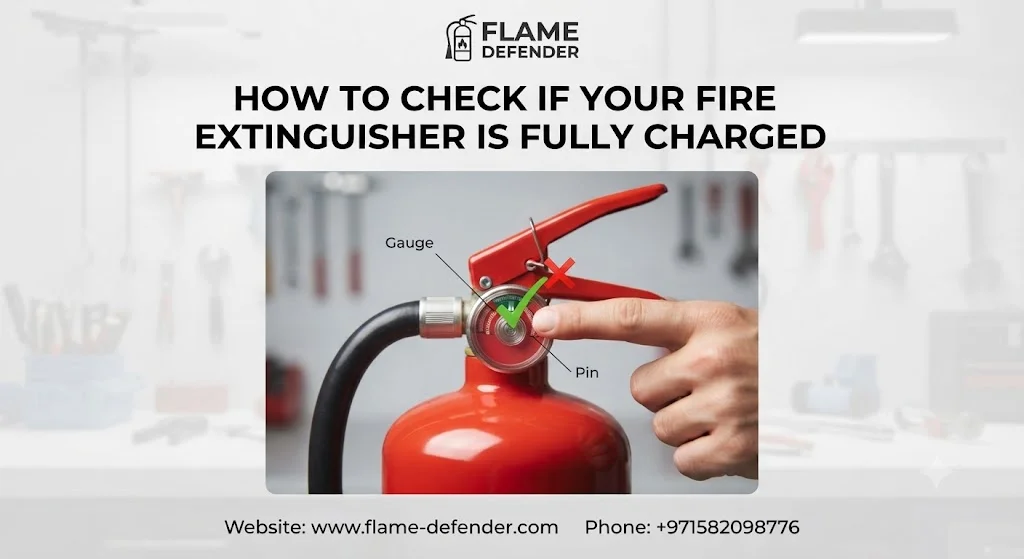
Most modern extinguishers — especially dry chemical (ABC/DCP) and CO2-alternative types — have a pressure gauge on the front, near the handle. This is the fastest way to check the charge.
The gauge is divided into color zones:
- Green zone — The extinguisher is properly charged and ready to use.
- Red zone (left side, “Recharge”) — The extinguisher is undercharged and needs immediate attention.
- Red zone (right side, “Overcharged”) — The extinguisher has too much pressure, which is also unsafe and needs servicing.
If the needle sits anywhere outside the green zone, don’t wait — get it inspected or refilled right away.
Note: CO2 extinguishers usually don’t have a gauge because their contents are stored as a liquefied gas under very high pressure. For these, weight is the only reliable way to check the charge (see Step 2).
Step 2: Check the Weight
Every extinguisher has two weights marked on it or in its documentation:
- Gross weight — the total weight of the extinguisher including the cylinder.
- Agent weight — the weight of the actual firefighting agent (powder, foam, or gas) inside.
To check:
- Lift the extinguisher and compare its weight to what’s printed on the label.
- If you have a scale, weigh it directly — this is especially important for CO2 extinguishers, since they don’t have a gauge.
- A noticeably lighter extinguisher than its rated weight is a clear sign it has lost pressure or agent and needs a refill.
Step 3: Inspect the Pin and Tamper Seal
Every extinguisher has a small pin near the handle, secured with a plastic tamper seal or tag.
- If the seal is broken or the pin is missing, it likely means the extinguisher has been used (even briefly) or tampered with — and it should be checked and refilled even if the gauge looks fine.
- An intact seal is a good sign, but it should still be paired with a gauge and weight check, since slow leaks don’t always trigger visible tampering.
Step 4: Examine the Cylinder Body
Physical damage can compromise an extinguisher just as much as low pressure. Check for:
- Rust or corrosion, especially near the base, valve, or welded seams
- Dents or cracks in the cylinder
- Leaking or caked powder around the nozzle or valve, which suggests the agent has settled or leaked
- Damaged hose or nozzle, which can prevent proper discharge even if the extinguisher is charged
If you notice any of these, the extinguisher should be taken out of service and inspected by a professional, regardless of what the gauge shows.
Step 5: Check the Manufacturing and Service Date
Every extinguisher has a manufacturing date and, ideally, a service/refill tag showing the last inspection date. As a general rule:
- Dry powder extinguishers should be professionally serviced and refilled roughly every 1–2 years, or immediately after any use.
- Even if it’s never been used, the internal pressure and agent quality can degrade over 3–5 years, depending on manufacturer guidelines.
If you can’t find a recent service tag, it’s safer to assume the extinguisher needs a checkup.
Step 6: Shake Dry Chemical Extinguishers (Occasionally)
For dry powder (ABC) extinguishers, the powder inside can settle or compact over time, especially if the extinguisher hasn’t moved in months. Gently turning it upside down and shaking it (as per the manufacturer’s instructions) helps keep the powder loose and ready to discharge properly. If you feel or hear the powder has hardened into a solid lump, this is a sign it needs professional servicing.
What to Do If Your Extinguisher Isn’t Fully Charged
If any of the checks above point to a problem — low gauge reading, wrong weight, broken seal, or physical damage — don’t try to refill it yourself. Fire extinguishers are pressurized equipment, and improper refilling can be dangerous.
Instead, get it serviced by a certified provider. If you’re based in Pakistan, professional fire extinguisher refilling in Pakistan is available through certified fire safety companies who can pressure-test, refill, and re-certify your extinguisher so it’s genuinely ready for an emergency — not just sitting there for show.
Why This Matters More in Pakistan
Pakistan’s hot summers, dusty environments, and, in many buildings, inconsistent maintenance schedules mean extinguishers often go years without a proper check. Many businesses install extinguishers once to meet a compliance requirement and never inspect them again. Combined with power fluctuations and a high rate of electrical fires in homes, shops, and factories, this makes regular checking — and timely refilling — a genuinely important safety step, not just a formality.
Final Thoughts
Checking whether your fire extinguisher is fully charged only takes a few minutes: look at the gauge, check the weight, inspect the seal and pin, examine the body for damage, and note the last service date. Make this a monthly habit, and don’t wait for an annual inspection to catch a problem that could have been spotted much earlier.
If your extinguisher fails any of these checks, don’t take chances — arrange for professional fire extinguisher refilling in Pakistan and keep your home, shop, or workplace genuinely fire-ready.
Frequently Asked Questions (FAQs)
1. How often should I check if my fire extinguisher is fully charged? You should do a quick visual check every month, and get a professional inspection at least once a year, or immediately after any use.
2. What does the green zone on a fire extinguisher gauge mean? The green zone means the extinguisher has the correct pressure and is ready for use. Any reading outside the green zone means it needs attention.
3. How can I check a CO2 fire extinguisher’s charge if it has no gauge? Since CO2 extinguishers don’t have a pressure gauge, you need to weigh the cylinder and compare it to the rated weight printed on the label. A significant weight loss means it needs a refill.
4. Can I refill a fire extinguisher myself at home? No. Refilling requires specialized equipment to safely pressurize the cylinder and the correct type of agent. It should always be done by a certified fire safety service provider.
5. How long does a fire extinguisher last before needing a refill? Most dry chemical extinguishers need refilling every 1 to 2 years, even without use, though this can vary by manufacturer. Always check the service tag for the exact schedule.
6. What are the signs that a fire extinguisher needs to be refilled? Key signs include a gauge needle outside the green zone, a lighter-than-rated weight, a broken tamper seal, visible rust or dents, or a missing/expired service tag.
7. Is it normal for a fire extinguisher to lose pressure over time even if unused? Yes, slow pressure loss can happen due to tiny leaks at the valve, temperature fluctuations, or general aging of the seals, which is why periodic checks are necessary even for extinguishers that have never been used.
8. Where can I get fire extinguisher refilling in Pakistan? Certified fire safety companies across major Pakistani cities offer refilling and re-certification services. You can arrange professional fire extinguisher refilling in Pakistan through a trusted provider.
9. Does a broken pin or tamper seal always mean the extinguisher was used? Not always, but it’s a strong indicator that the extinguisher may have been tampered with or partially discharged, so it should be checked and refilled to be safe.
10. What happens if I use a fire extinguisher that isn’t fully charged? It may produce a weak spray, discharge for only a few seconds, or not work at all, leaving you without protection exactly when you need it most. This is why regular charge checks are essential.